Garments Accessories List: Every Trim and Who Tracks It
A full garments accessories list in one table: sewing trims and packing items, where each is used, what buyers specify, who is responsible and what goes wrong.
A garments accessories list covers every item on an order other than the main fabric. It falls into two groups. Sewing trims are attached to the garment on the line: thread, buttons, zippers, interlining, elastic, labels, tapes and metal fasteners. Finishing and packing accessories are added after sewing: hang tags, price tickets, barcode stickers, polybags, cartons and the small items that hold a folded garment in shape. The table below lists each item, where it is used and what the buyer usually specifies.
Trims and accessories: is there a difference
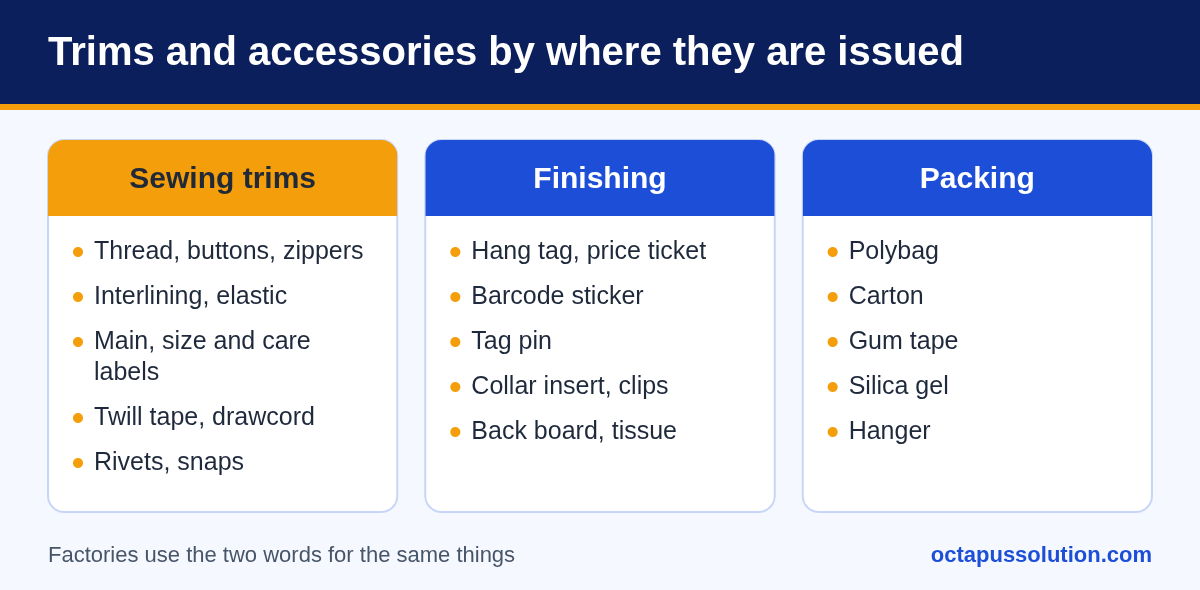
Textbooks draw a line. Trims are materials attached to the garment, usually by sewing. Accessories are the items used to finish, present and pack it. By that rule a button is a trim and a polybag is an accessory.
On the factory floor the two words are used for the same things. Booking sheets are headed "Trims/Accessories", the store is called the accessories store, and the supplier is called an accessories factory even when most of what it makes is labels. The practical split is by where the item is issued:
Sewing trims are issued to the sewing line with the cut panels.
Finishing and packing accessories are issued to the finishing and packing sections.
The garments accessories list
Item | Where used | What the buyer usually specifies |
|---|---|---|
Sewing thread | All seams, bartacks, buttonholes | Count or ticket number, fibre, shade matched to fabric |
Buttons | Placket, cuff, waistband, pocket | Material, size (ligne), colour, logo, nominated supplier |
Zippers | Fly, front opening, pockets | Type, length by size, tape shade, puller, nominated brand |
Interlining | Collar, cuff, placket, waistband | Fusible or sew-in, weight, colour |
Elastic | Waistband, cuff, leg opening | Width, stretch, colour |
Main label | Centre back neck or waistband | Artwork, woven or printed, size, fold |
Size label | Beside or under the main label | Size wording per market, quantity by size |
Care label | Side seam or centre back | Fibre content, wash symbols, origin, languages, tracking codes |
Twill tape | Neck tape, side slit, seam reinforcement | Width, composition, shade, print if any |
Drawcord | Hood, waistband, hem | Length by size, tip type, shade, safety limits on childrenswear |
Rivets | Pocket corners on denim and workwear | Size, finish, logo, metal safety standard |
Snap buttons | Plackets, babywear, jackets | Type, size, finish, attachment strength |
Hook and loop | Cuff tabs, pocket flaps, closures | Width, colour, sew-on or adhesive |
Hang tag | Attached at label, sleeve or waistband | Artwork, board weight, finish, string or pin |
Price ticket | On the hang tag or as a separate ticket | Price, currency, barcode, style and size data |
Barcode sticker | Hang tag, polybag, carton | Barcode type and data, size, position |
Polybag | Each piece or each pack | Material, thickness, size, warning text, recycling mark |
Carton | Shipping pack | Ply, dimensions, weight limit, shipping marks |
Tissue paper | Inside the folded garment | Size, weight, plain or printed |
Back board | Behind a folded shirt | Board weight, size, sometimes recycled content |
Collar insert | Inside and under a shirt collar | Plastic or paper, shape, size |
Clips | Holding the folds of a packed shirt | Plastic or metal, number per piece |
Hanger | Garments shipped on hanger | Model, size range, sizer, nominated supplier |
Silica gel | Inside the polybag or carton | Sachet weight, number per carton, permitted type |
Gum tape | Sealing the carton | Width, plain or printed |
Tag pin | Attaching hang tag to garment | Length, colour, position |
Not every order uses every item. A basic T-shirt may need eight or nine of these. A woven shirt or a lined jacket may need twenty or more, and many buyers add their own.
Who is responsible for what
The merchandiser reads the tech pack and purchase order, works out consumption per piece, adds wastage and issues the trims booking to suppliers. The merchandiser also gets artwork and quality approved by the buyer. Many buyers nominate the supplier for labels, zippers and buttons, so the choice is often not the factory's.
The accessories supplier develops the item, submits it for approval, produces the bulk and delivers against the booking.
The store receives each delivery, counts it, checks it against the approved trim card and records the in-house date. It issues to sewing and finishing against the cutting quantity and reports shortages.
Quality inspects incoming trims for shade, measurement and print before they reach the line.
An order is ready to sew only when every sewing trim is in-house and approved. It is ready to pack only when every packing item is.
A quick booking example
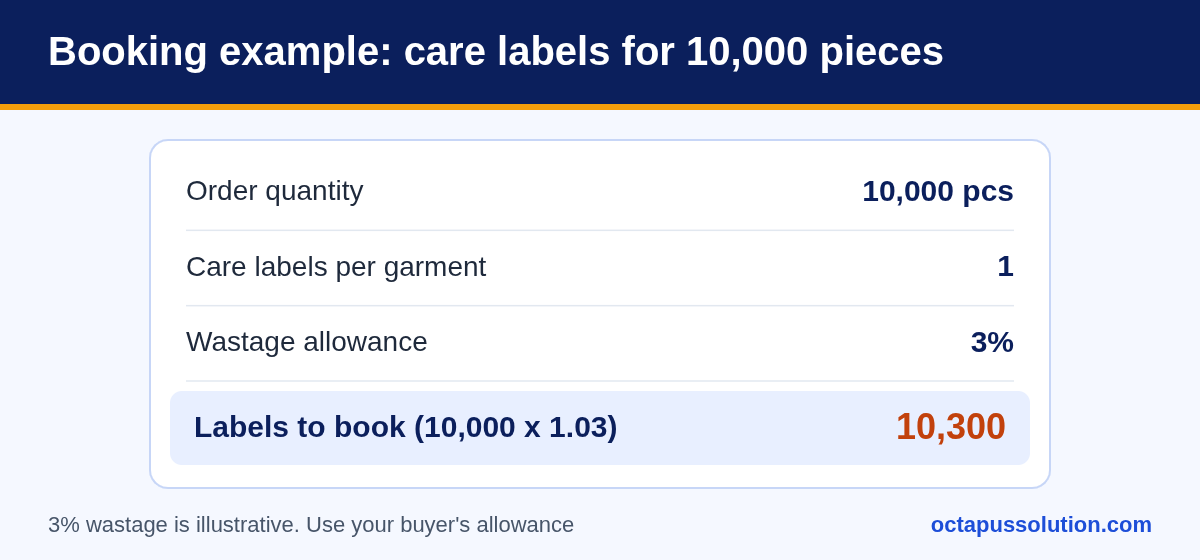
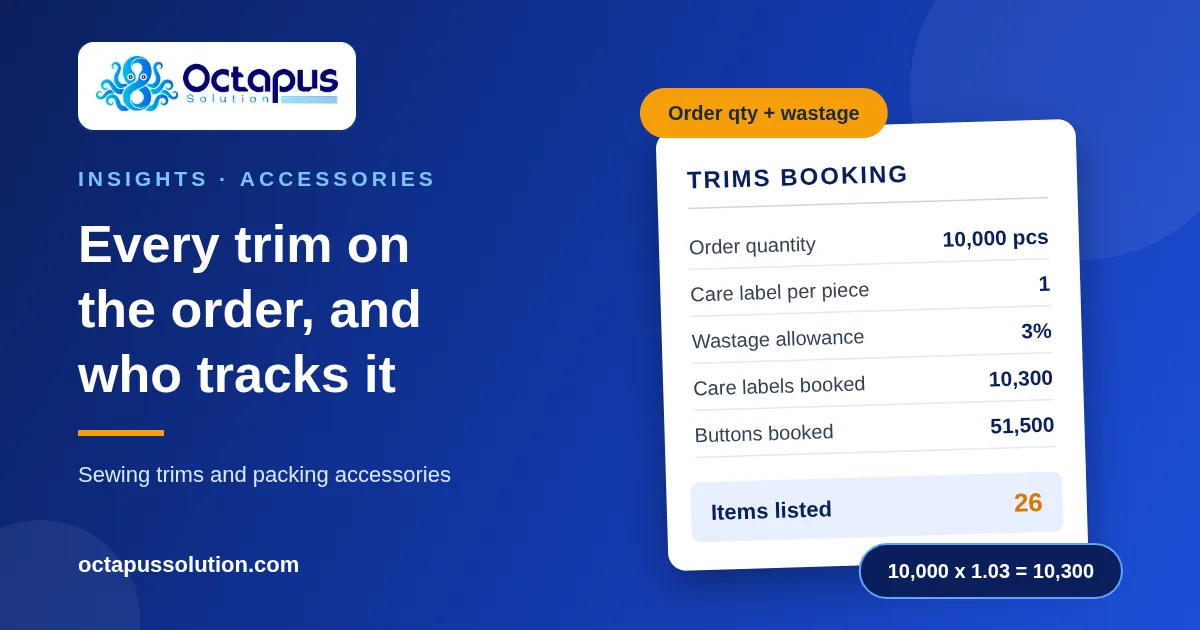
An order of 10,000 polo shirts needs one care label per piece. With a 3% allowance for wastage, the booking is 10,000 x 1.03 = 10,300 labels. Each shirt has three buttons on the placket and two on the cuffs, so 50,000 buttons, or 51,500 with the same allowance.
The cost of a shortage has little to do with the price of the trim. If the care labels cost Tk 1 each, the full booking is worth Tk 10,300. If 400 are short, a line can stand idle and the shipment can miss its date over about Tk 400 of labels. The allowance percentage and the label price here are illustrative. Use your own.
What goes wrong
Wrong care label text. A fibre percentage, a wash symbol or a country of origin that does not match the garment. It is often found at final inspection, after the label is sewn into every piece. Care label content is a legal matter in most import markets, so the buyer will not accept a mistake.
Shade mismatch. Thread, zipper tape, buttons or twill tape that do not match the bulk fabric, usually because they were matched to a lab dip and not to the bulk lot.
Late in-house. One missing trim holds the whole order. The usual causes are late artwork approval, late booking and suppliers working on short lead times.
Wrong size or colour breakdown. The total is right but there are too many size M labels and too few XL.
Revised purchase orders. The buyer changes a price, a barcode or a quantity after the tickets have been printed.
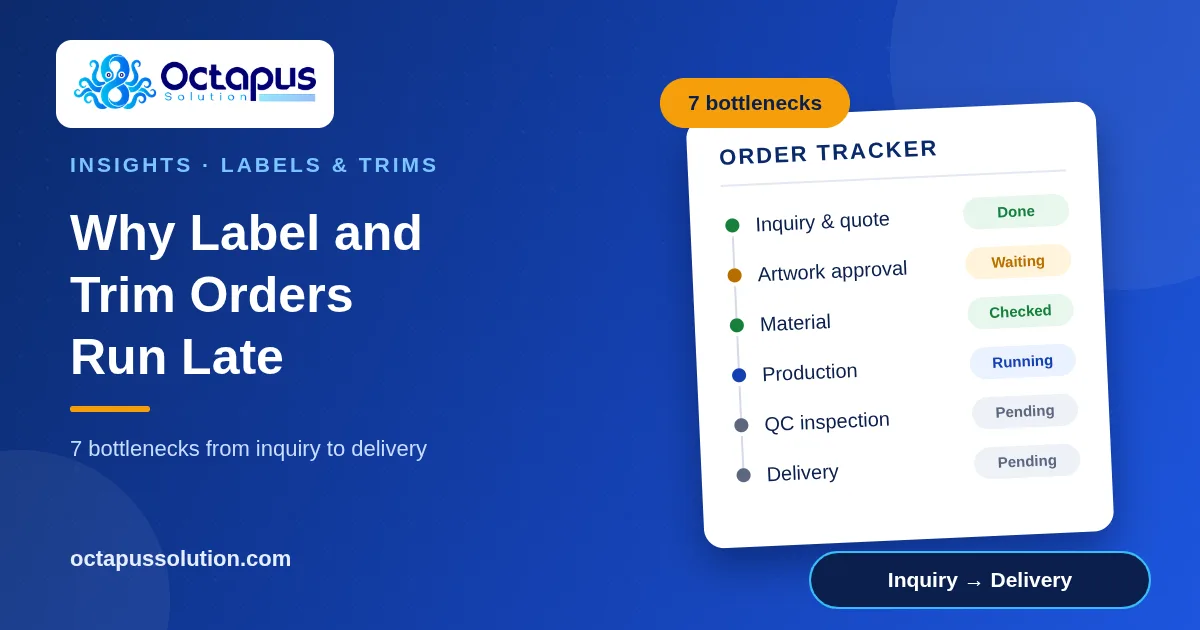
We have written separately about why label and trim orders run late and where the delays build up.
What an accessories manufacturer has to track per order
For the label, tag or packaging factory, each booking is small and detailed, and there are a great many of them. For every order it has to keep hold of:
Artwork approval. Which version was approved, by whom and on what date. Production on an unapproved or outdated artwork is the most expensive mistake a label factory makes.
Quantity by size and colour. A single care label order can break into dozens of lines by size, colour, country and purchase order.
Variable data. Prices, barcodes and size text that change from line to line and must match the buyer's file exactly.
Materials. Which tape, board, ink or yarn was used, and whether it is in stock for the quantity.
Delivery. The date promised, part deliveries made, the balance outstanding and the signed challan from the garment factory's store.
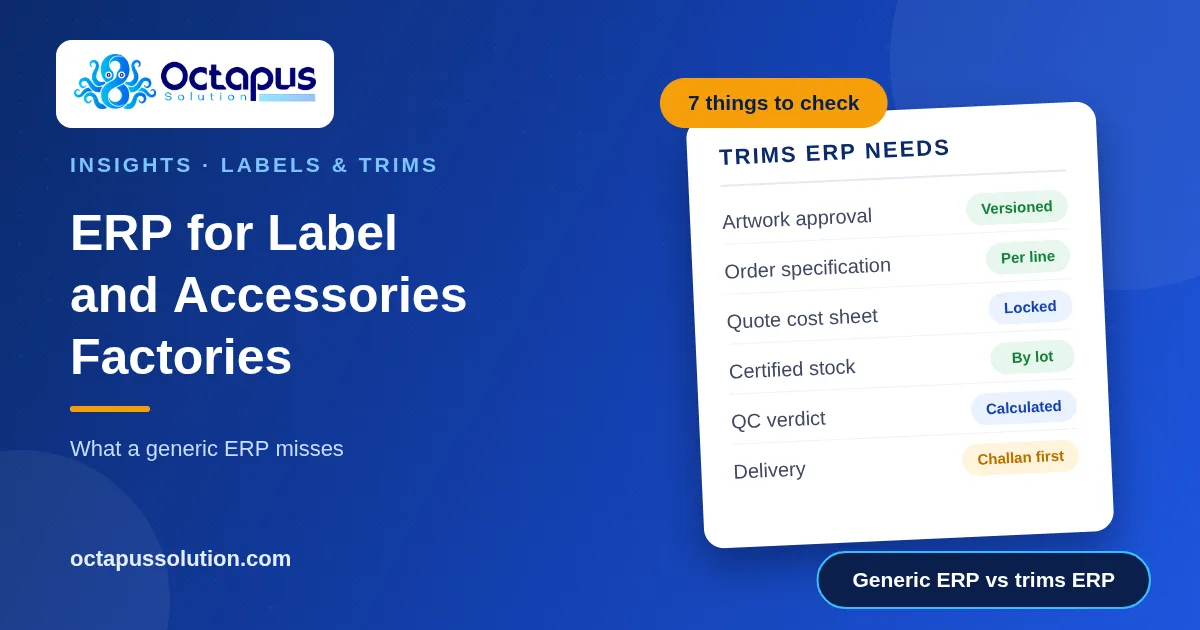
The requirements are covered in more detail in what an ERP for a label and garment accessories factory needs to do.
Frequently asked questions
What is the difference between trims and accessories in garments? In textbooks, trims are attached to the garment and accessories are used for finishing and packing. In most factories the two words are used interchangeably.
Is sewing thread a trim? Yes. It is booked, shade-matched and issued like any other sewing trim, although it is calculated by length per garment and not by piece.
Who supplies garment accessories in Bangladesh? Mostly local accessories and packaging factories, many of them nominated by the buyer. Some branded items, such as certain zippers and buttons, are imported or made locally by international brands.
When should trims be in-house? Sewing trims before line input, and packing accessories before finishing starts. The exact number of days is set in each factory's time and action plan.
Where Octapus fits
Trimflow is our manufacturing ERP for labels, tags and garment accessories factories. It is built for the supplier side of this list: factories that receive many small, detailed orders and have to deliver each one correctly and on time.
If you run an accessories factory and still track orders across spreadsheets and message threads, have a look at the product page and tell us how your orders flow now.
TopicLabels & Trims